 Plazarow Labs
The small square at the heart of a neighbourhood
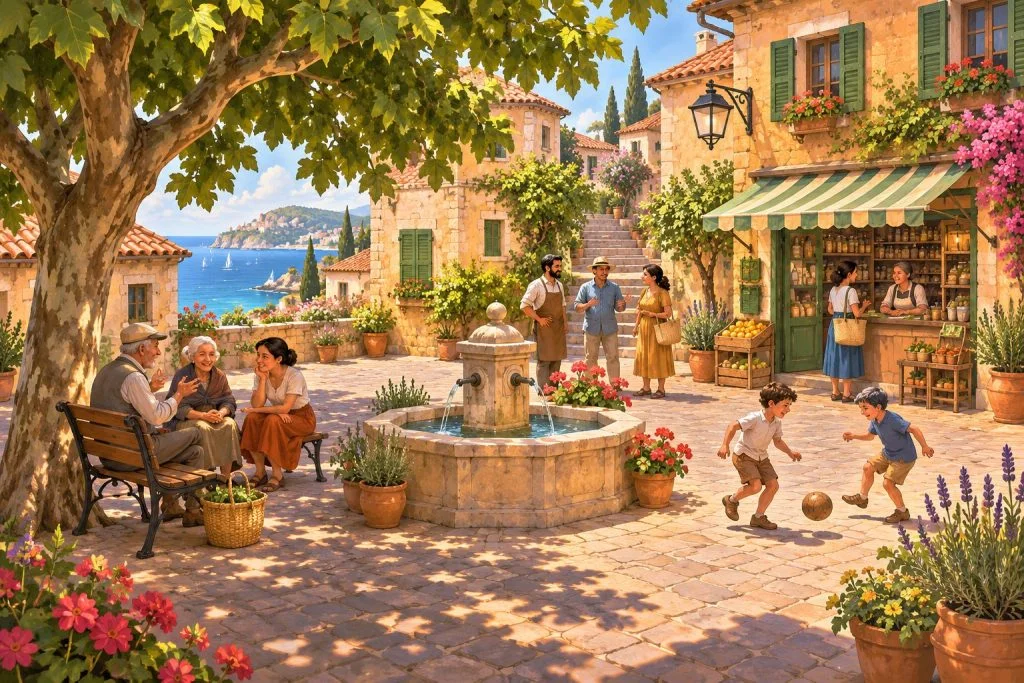
When we picture a lively city, we often imagine a skyline. When we remember a place, we tend to remember something smaller: a meeting point, a familiar shop or a patch of shade on the way home. That difference is central to how we think about Common Ground.
Begin with the routes
A square should connect useful journeys. If it sits outside the routes people already want to take, decoration alone will not bring it to life. We start by asking where residents are travelling and what might make them pause.
Give the edges a role
The buildings around an open space help define its character. A café entrance, a workshop window and a local shop produce different patterns of use. We want those differences to be visible in the simulation rather than implied by the artwork alone.
Make room for observation
Our design goal is to let players see a change unfold. Move a path, adjust an edge or add a useful destination, then watch how the neighbourhood responds. The square becomes a way to understand a system and a place worth caring about.
These questions guide our concept work. We will keep sharing the reasoning behind the places we build as the project develops.